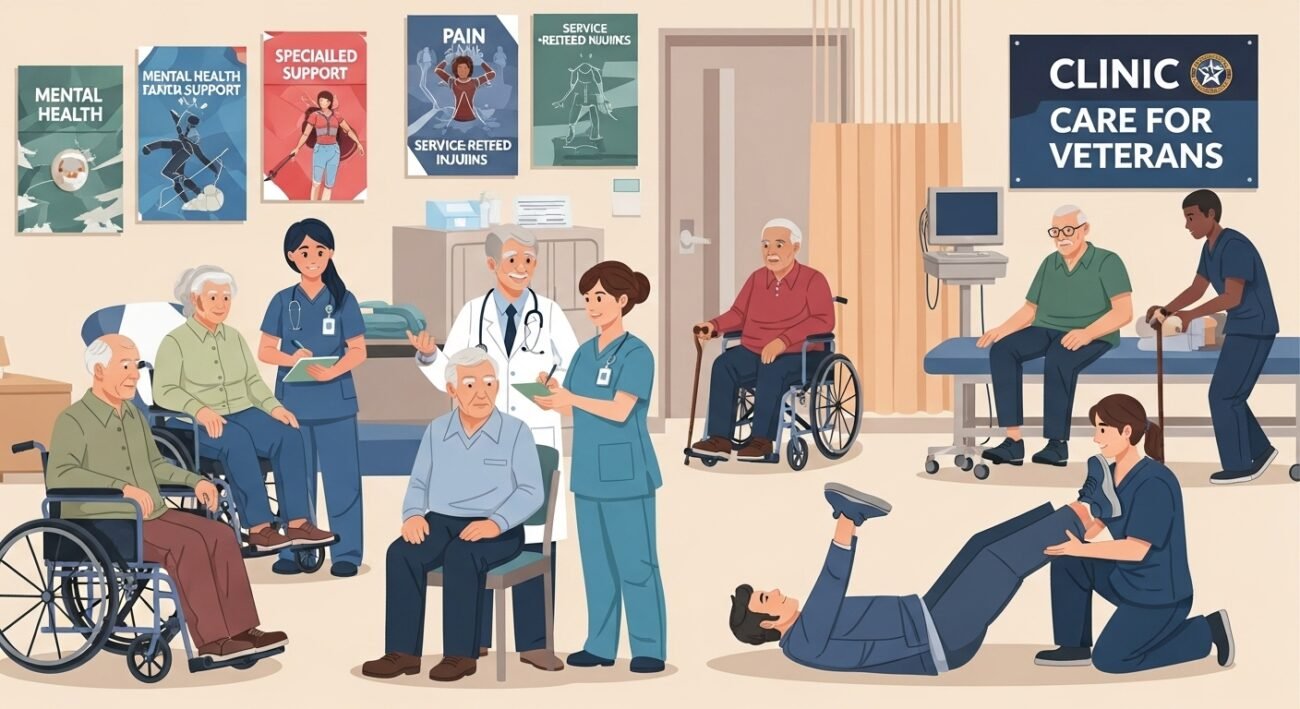
Military veterans carry unique health burdens arising from their service — physical injuries sustained in combat or training, toxic exposures (Agent Orange, burn pit emissions, asbestos, lead), mental health consequences of trauma and service, and transitions between military and civilian healthcare systems that create gaps in care continuity. The Department of Veterans Affairs (VA) healthcare system provides comprehensive, specialized care for eligible veterans — and private medical clinics increasingly need to understand veterans’ unique health needs to provide effective care. This guide explains the health needs specific to veterans and the clinical resources available.
Common Health Issues in Veterans
Traumatic brain injury (TBI) — from blast exposure — is the “signature wound” of post-9/11 conflicts, affecting hundreds of thousands of veterans with cognitive, emotional, and neurological consequences. PTSD — post-traumatic stress disorder — is prevalent in combat veterans, with rates of 11–20% among post-9/11 veterans. Chronic pain from musculoskeletal injuries accumulated during service affects the majority of veterans seeking care. Burn pit and airborne hazard exposure — from destroying materials in open burn pits in Iraq and Afghanistan — has been linked to respiratory conditions, rare cancers, and other health effects, addressed through the PACT Act (2022) which expanded VA benefits for toxic exposure-related conditions. Military sexual trauma (MST) — sexual assault or harassment during military service — affects both male and female veterans and is associated with PTSD, depression, and other health consequences.
The VA Healthcare System
Eligible veterans receive comprehensive healthcare through VA medical centers (large hospitals) and VA community-based outpatient clinics (CBOCs) — a nationwide network providing primary care, mental health, specialty care, and rehabilitation. Veterans with service-connected conditions receive higher priority enrollment. The MISSION Act expands veterans’ access to community (non-VA) care when VA care is unavailable within access standards.
Conclusion
Veterans deserve healthcare that understands and addresses the specific health consequences of military service — not just standard care without acknowledgment of their unique history. Whether through the VA system or civilian clinics, asking veterans about their military service and assessing service-related health risks is the starting point for veteran-centered care.
FAQs – Veteran Healthcare
Q1. Who is eligible for VA healthcare?
A: Veterans who served on active duty and were discharged under conditions other than dishonorable may be eligible for VA healthcare. Eligibility priority and benefits depend on factors including service-connected disability rating, income, and period of service. Visit va.gov/health-care/eligibility to determine eligibility.
Q2. Does the VA cover mental health treatment?
A: Yes. The VA provides comprehensive mental health services including PTSD treatment (Prolonged Exposure, Cognitive Processing Therapy), substance use treatment, suicide prevention programs, and general mental health services. Telehealth mental health services have expanded significantly.
Q3. What is the PACT Act?
A: The Sergeant First Class Heath Robinson Honoring our Promise to Address Comprehensive Toxics (PACT) Act (2022) is the largest expansion of VA benefits in decades, extending eligibility to veterans exposed to burn pits and other toxic substances and establishing presumptive service connections for numerous cancers and respiratory conditions linked to toxic exposure.
Q4. Can veterans use private clinics while also receiving VA care?
A: Yes. Veterans can receive care from both VA and private/community providers. Coordination between systems is important — ensuring that VA providers know about community care and vice versa prevents dangerous gaps in medication management and health monitoring.
Q5. What is the Veterans Crisis Line?
A: The Veterans Crisis Line (call 988, press 1; text 838255; chat at veteranscrisisline.net) provides 24/7 confidential crisis support to veterans, service members, and their families by trained VA responders. This life-saving resource is available regardless of VA enrollment status.
