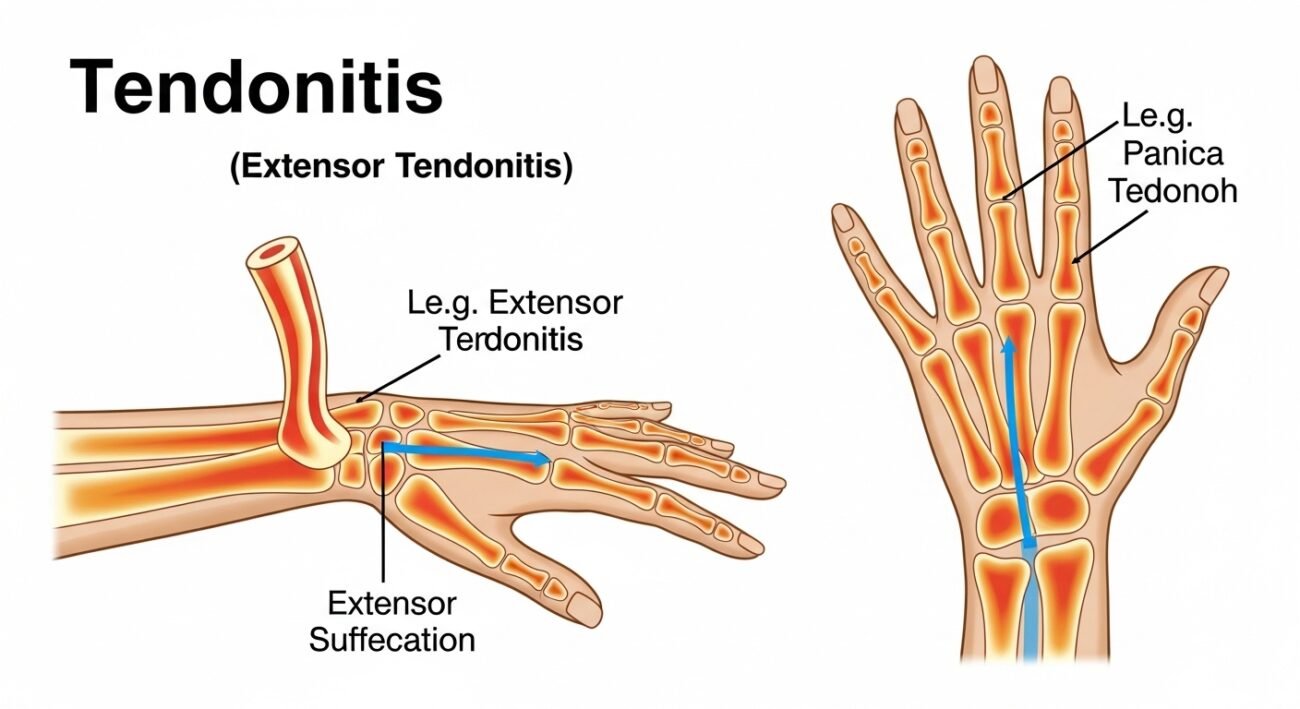
The hand and wrist enable the fine motor function that defines human capability — grasping, writing, typing, operating instruments, and countless other precision activities. Hand and wrist conditions — carpal tunnel syndrome, trigger finger, de Quervain’s tenosynovitis, ganglion cysts, and fractures — are among the most common musculoskeletal conditions seen in orthopedic and occupational medicine clinics. Prompt, accurate evaluation and treatment preserve hand function and prevent progression to permanent impairment. This guide explains common hand and wrist conditions and their clinical management.
Carpal Tunnel Syndrome (CTS)
The most common peripheral nerve compression syndrome — caused by median nerve compression within the carpal tunnel of the wrist. Classic symptoms include nocturnal numbness and tingling in the first three fingers and thumb, hand weakness, and dropping objects. Diagnosis is confirmed by nerve conduction studies. Treatment progresses from nighttime splinting and activity modification, to corticosteroid injections, to surgical carpal tunnel release (one of the most common surgical procedures performed, with excellent outcomes).
Trigger Finger (Stenosing Tenosynovitis)
Inflammation of the flexor tendon sheath causing catching, locking, or snapping of the finger when moving it. Treated with corticosteroid injection (effective in 70–80% of cases) or surgical A1 pulley release for refractory cases. More common in diabetics.
De Quervain’s Tenosynovitis
Inflammation of the abductor pollicis longus and extensor pollicis brevis tendons at the radial wrist, causing pain with thumb and wrist movement. Positive Finkelstein test (ulnar deviation of the wrist with the thumb enclosed in the fist). Treated with thumb spica splinting, corticosteroid injection, and physical therapy. Associated with repetitive gripping activities and new parenthood (lifting an infant).
Ganglion Cysts
Fluid-filled cysts arising from joint capsules or tendon sheaths — most commonly at the dorsal wrist. Most require no treatment when asymptomatic. Symptomatic cysts are treated with aspiration (drainage) or surgical excision.
Conclusion
Hand and wrist conditions deserve prompt attention — functional impairment in the hands significantly affects work capacity, daily self-care, and quality of life. Many conditions are highly treatable with simple interventions when caught early. Do not ignore persistent hand or wrist pain, numbness, or stiffness — early clinic evaluation prevents the progression that makes treatment more complex.
FAQs – Hand and Wrist Clinics
Q1. How do I know if my hand numbness is carpal tunnel syndrome?
A: Carpal tunnel syndrome typically causes nocturnal numbness and tingling in the thumb, index, middle, and radial half of the ring finger — often waking you from sleep. Shaking the hand provides relief (Flick sign). Symptoms are reproduced by prolonged wrist flexion or pressure over the carpal tunnel. Nerve conduction studies confirm the diagnosis.
Q2. Can carpal tunnel syndrome resolve without surgery?
A: Mild CTS often responds to nighttime splinting, activity modification, and ergonomic changes. Corticosteroid injections provide temporary relief for moderate CTS. Surgical release is indicated when conservative measures fail, when weakness develops, or when nerve conduction studies show significant median nerve impairment.
Q3. What is Dupuytren’s contracture?
A: Progressive fibrosis of the palmar fascia causing fixed flexion contracture of the fingers (most commonly the ring and little fingers), preventing full extension. Treatment includes collagenase injection (Xiaflex) or surgical fasciectomy when contracture exceeds 30 degrees.
Q4. How long does recovery from carpal tunnel surgery take?
A: Most patients return to light activities within 1–2 weeks and full activity within 4–6 weeks. Grip strength may take 2–6 months to fully recover. Nerve recovery from CTS progresses over months — symptom improvement is gradual.
Q5. Can repetitive computer use cause carpal tunnel syndrome?
A: The relationship between computer use and CTS development is less clear than commonly believed. Strong risk factors include female sex, obesity, hypothyroidism, diabetes, pregnancy, and vibrating tool use. Ergonomic optimization (neutral wrist position, appropriate workstation height) reduces repetitive strain regardless of its specific CTS relationship.
