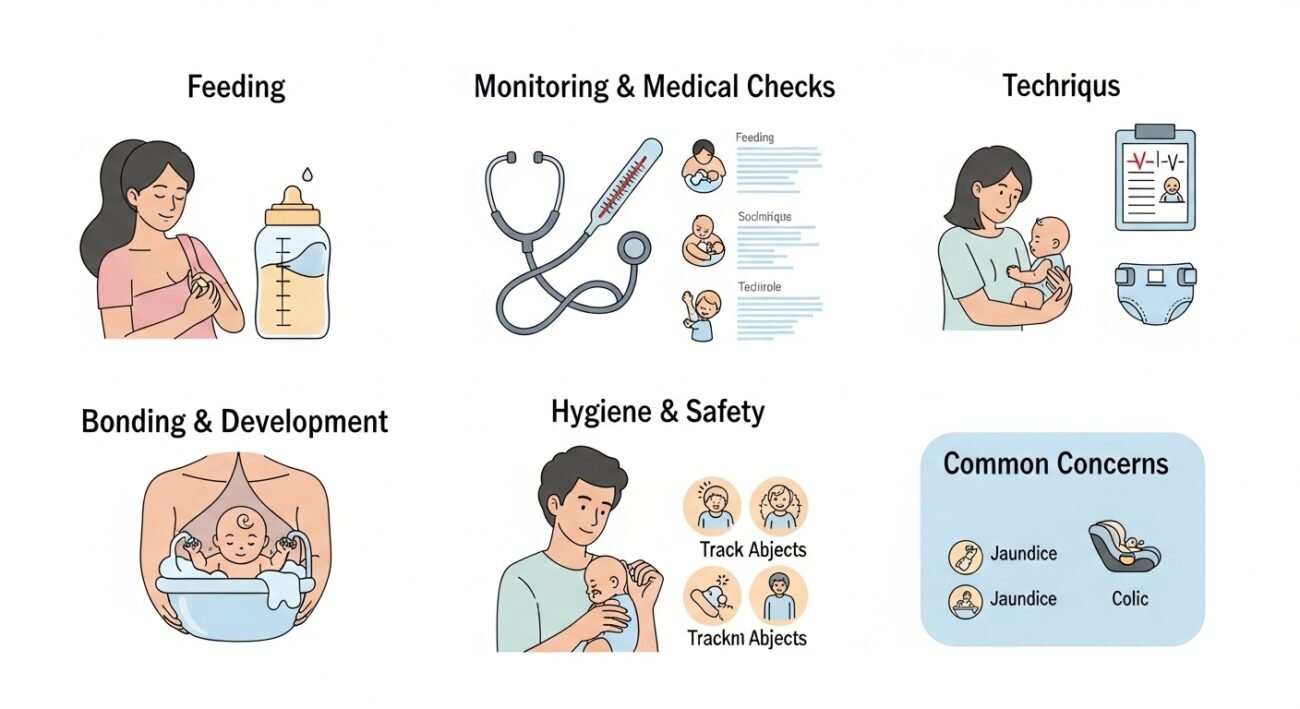
The first weeks of a newborn’s life involve a remarkable biological transition from intrauterine to extrauterine existence — and require careful medical monitoring to identify and address the conditions that most commonly affect newborns. Pediatric clinics and neonatology teams provide the assessments, vaccinations, and interventions that support healthy newborn development and catch problems early. This guide explains what neonatal care involves and what parents can expect in the first weeks.
Birth Hospital Care
Immediately after birth, the newborn receives the Apgar score assessment (evaluating heart rate, breathing, muscle tone, reflex response, and color at 1 and 5 minutes), vitamin K injection (preventing newborn hemorrhagic disease), hepatitis B vaccination (first dose), erythromycin eye prophylaxis (preventing gonorrheal conjunctivitis), and newborn metabolic screening (heel stick blood sample screening for 30+ metabolic and hormonal conditions). All healthy newborns receive these interventions as standard of care.
Newborn Metabolic Screening
The newborn screen — obtained at 24–48 hours of age — tests for more than 30 conditions including phenylketonuria (PKU), congenital hypothyroidism, cystic fibrosis, sickle cell disease, and many rare metabolic disorders. Early detection allows treatment before irreversible damage occurs. If a newborn screen is abnormal, your clinic or state health department contacts you promptly for confirmatory testing — most positive screens are false positives that resolve on repeat testing.
First Clinic Visit
The AAP recommends the first well-baby visit within 3–5 days of hospital discharge for breastfeeding infants (earlier if there are concerns about jaundice or feeding). This visit checks weight (newborns typically lose 7–10% of birth weight before regaining it by day 10–14), assesses feeding, evaluates for jaundice, and addresses parents’ questions and concerns. Subsequent visits at 1 month, 2 months, and continuing through childhood follow the AAP schedule.
Common Newborn Conditions
Jaundice (yellowing from bilirubin accumulation) is very common in the first week — managed with phototherapy when bilirubin levels are elevated. Breastfeeding difficulty is extremely common and managed through lactation support. Umbilical cord care, diaper rash management, and normal newborn behavioral patterns (sleep irregularity, normal crying) are addressed through your pediatric clinic’s guidance.
Conclusion
The newborn period is filled with both wonder and worry for new parents. Your pediatric clinic is your essential resource for guidance, reassurance, and early identification of any concerns. Contact your clinic proactively for any concern — no question is too small when your newborn’s wellbeing is involved. The relationship you build with your pediatrician beginning in these first weeks supports your child’s health for years to come.
FAQs – Neonatal Care
Q1. Is newborn weight loss after birth normal?
A: Yes. Most newborns lose 7–10% of birth weight in the first few days due to normal fluid loss. Weight should return to birth weight by 10–14 days. Weight loss exceeding 10% or failure to regain birth weight warrants evaluation of feeding adequacy at your pediatric clinic.
Q2. What is jaundice and how serious is it?
A: Neonatal jaundice (yellowing) is caused by bilirubin — a product of red blood cell breakdown — accumulating faster than the newborn liver can process it. Most jaundice is physiological (normal) and resolves without treatment. Elevated bilirubin levels require phototherapy to prevent rare neurological complications. Your pediatrician monitors bilirubin levels and determines if treatment is needed.
Q3. Should I be concerned about newborn crying?
A: Crying is the newborn’s only communication — hunger, discomfort, and need for comfort are the most common causes. Colic (inconsolable crying for more than 3 hours per day, more than 3 days per week, in the first 3 months) affects approximately 20% of babies and is distressing but self-limited. Contact your clinic if crying is associated with fever, unusual appearance, or seems different from your baby’s normal cry.
Q4. When does the umbilical cord stump fall off?
A: Usually within 1–3 weeks after birth. Keep the stump dry and clean — expose it to air and fold the diaper below it. Normal separation may produce a small amount of blood. Signs of infection (redness, swelling, warmth, odor, or pus around the base) require clinic evaluation.
Q5. Should newborns sleep on their backs?
A: Yes. The AAP’s safe sleep recommendations specify that infants sleep on their backs on a firm, flat surface, in their own sleep space (not shared with adults or siblings), without soft bedding, pillows, bumper pads, or sleep positioners. Following safe sleep guidelines dramatically reduces the risk of SIDS (sudden infant death syndrome).
