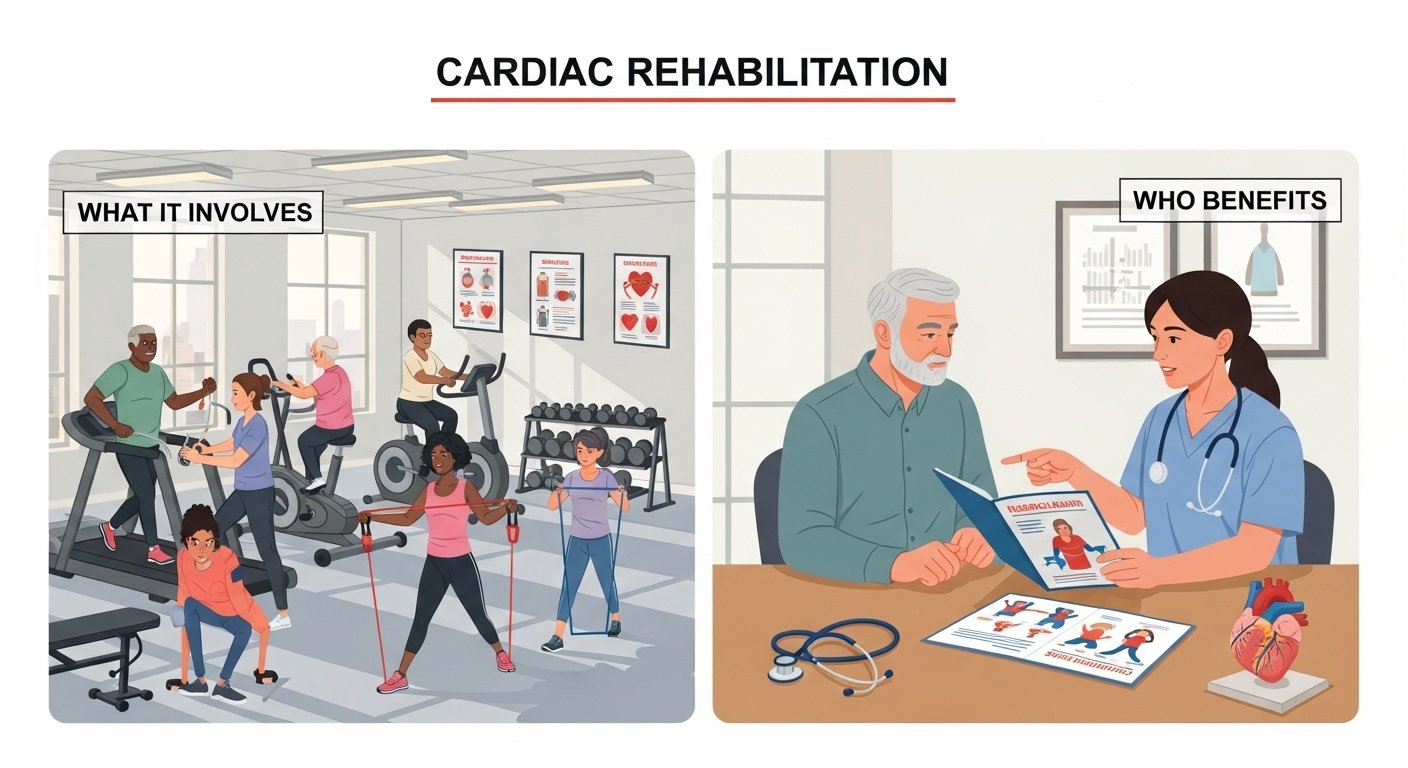
Cardiac rehabilitation (CR) is a medically supervised, comprehensive secondary prevention program for patients who have had a heart attack, cardiac surgery, stent placement, or heart failure. Despite robust evidence demonstrating that CR reduces mortality by 25–35% and significantly improves exercise capacity, quality of life, and risk factor control, it remains dramatically underutilized — fewer than 25% of eligible patients attend. This guide explains what cardiac rehabilitation involves and why participation is one of the most beneficial interventions available after a cardiac event.
Components of Cardiac Rehabilitation
Medically Supervised Exercise
The central component — structured exercise training with continuous cardiac monitoring (ECG, blood pressure, oxygen saturation) that gradually increases intensity as the patient’s cardiac function improves. Exercise training improves aerobic capacity, reduces cardiac workload, and builds the physical confidence that many post-cardiac event patients lack.
Risk Factor Management
CR programs comprehensively address cardiovascular risk factors: blood pressure monitoring, cholesterol management, diabetes education, weight management counseling, and dietary education with registered dietitian involvement. These services complement your clinic’s pharmacological management.
Psychological Support
Post-cardiac event depression and anxiety are addressed through counseling, peer support from others navigating similar experiences, and stress management education — addressing the psychological dimension of recovery that medications alone cannot provide.
Education
CR provides comprehensive cardiac education: understanding your heart disease, medications, warning signs requiring medical attention, safe physical activity, dietary heart health, and strategies for sustaining lifestyle changes long-term.
Who Is Eligible
Standard CR eligibility includes: myocardial infarction within 12 months, coronary artery bypass surgery, current stable angina, heart valve repair or replacement, coronary stenting or angioplasty, heart or heart-lung transplant, and stable heart failure. Your cardiologist or clinic provides the referral.
Conclusion
Cardiac rehabilitation is one of the most evidence-based, cost-effective interventions in cardiovascular medicine — reducing recurrent events, improving function, and significantly extending survival. If you or a family member has had a qualifying cardiac event and has not enrolled in cardiac rehabilitation, ask your cardiologist or clinic for a referral today. The program typically involves three sessions per week for 12 weeks — an investment that saves lives.
FAQs – Cardiac Rehabilitation
Q1. Is cardiac rehab safe after a heart attack?
A: Yes. CR is specifically designed for post-cardiac event patients, with continuous monitoring that allows staff to respond immediately to any cardiac events. The cardiovascular risk during supervised exercise in CR is actually lower than unsupervised exercise at home.
Q2. Is cardiac rehabilitation covered by insurance?
A: Medicare covers CR for qualifying diagnoses. Most private insurance plans cover CR. Coverage typically includes a defined number of sessions (36 for Medicare) — verify your specific plan’s coverage when enrolling.
Q3. What if I can’t attend a traditional in-person cardiac rehab program?
A: Home-based CR programs — increasingly available and validated — provide supervised exercise, education, and monitoring through telehealth and remote monitoring technology. These programs achieve outcomes comparable to center-based CR and are particularly valuable for patients with transportation barriers.
Q4. Is cardiac rehab only exercise?
A: No. Exercise training is the central component, but comprehensive CR includes risk factor management, dietary education, psychological support, and cardiac health education. The holistic approach produces better outcomes than exercise alone.
Q5. Why do so few people attend cardiac rehab when it is so beneficial?
A: Barriers include low physician referral rates, patient transportation challenges, lack of awareness of CR’s benefits, time constraints, depression reducing motivation, and out-of-pocket costs for some patients. Identifying and addressing these barriers — including home-based alternatives — is a focus of cardiac care quality improvement efforts.
