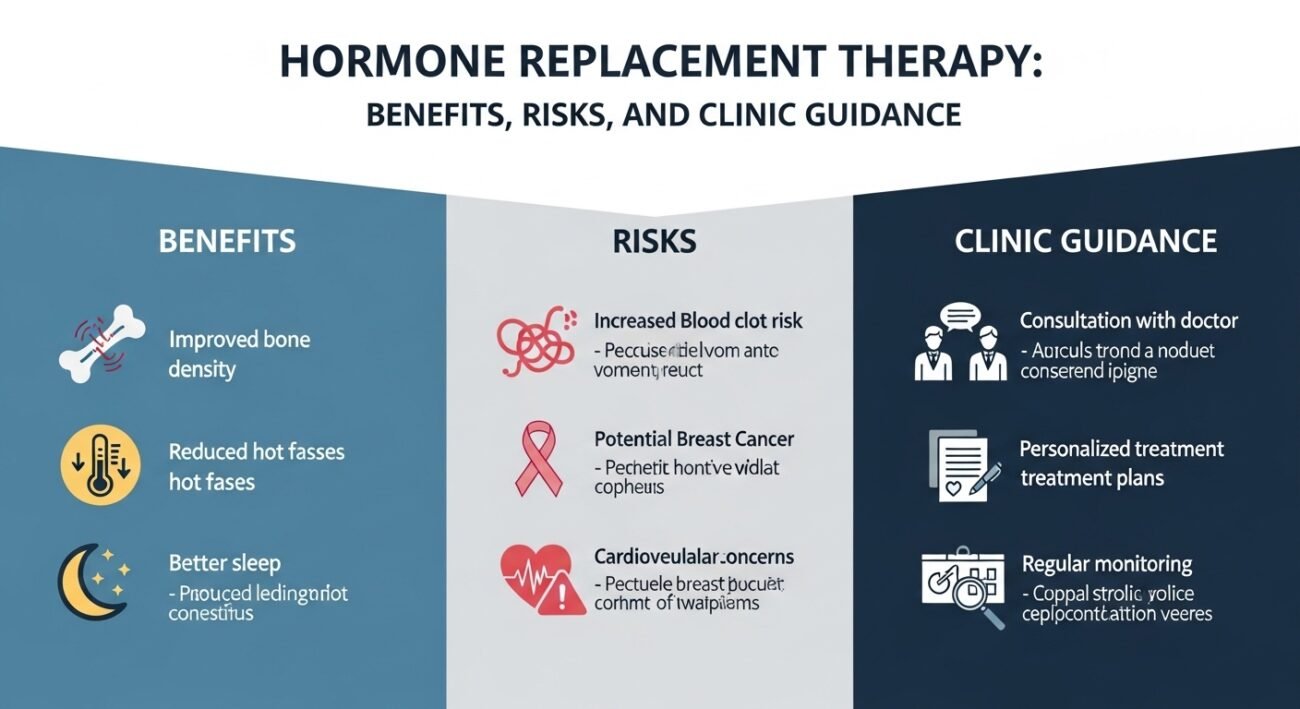
Hormone replacement therapy (HRT) — also called menopausal hormone therapy (MHT) — involves supplementing estrogen (and progestogen for women with a uterus) to manage the hormonal decline of menopause. After decades of confusion following the 2002 Women’s Health Initiative study that dramatically reduced HRT use based on concerns about breast cancer and cardiovascular risk, our understanding has been refined. For many women, particularly those under 60 or within 10 years of menopause onset, HRT provides significant symptom benefit with manageable risks. Medical and women’s health clinics provide individualized HRT counseling and prescribing. This guide explains HRT in current clinical context.
Benefits of HRT
HRT is the most effective treatment for vasomotor symptoms (hot flashes, night sweats) — responsible for the sleep disruption, mood effects, and quality-of-life impairment that characterize the menopause transition. HRT also treats genitourinary symptoms (vaginal dryness, discomfort with sex, recurrent UTIs), preserves bone density (preventing osteoporosis), and may reduce risk of Type 2 diabetes and cardiovascular disease when started in early menopause (the “timing hypothesis”).
Risks and Considerations
Combined estrogen-progestogen therapy (required for women with a uterus to prevent endometrial cancer) is associated with a small increased risk of breast cancer — approximately 1 additional case per 1,000 women per year of use. Estrogen-alone therapy (for women after hysterectomy) has no significant breast cancer risk increase and possible risk reduction. Cardiovascular and thrombosis risks are primarily associated with older women starting HRT more than 10 years after menopause and with oral (versus transdermal) formulations.
Shared Decision-Making
HRT decisions require personalized risk-benefit assessment: your symptom severity, age, time since menopause, cardiovascular and breast cancer risk factors, and personal values all inform the decision. The current consensus supports short-term HRT for symptom management in otherwise healthy women under 60 within 10 years of menopause onset who are troubled by significant menopausal symptoms.
Conclusion
HRT is no longer the universally avoided therapy it became after 2002 — a more nuanced understanding of timing, formulation, and individual risk has restored its important place in women’s health. If you are struggling with significant menopausal symptoms, have an honest, detailed conversation with your clinic about whether HRT is appropriate for you and what formulation and duration would best balance your benefits and risks.
FAQs – Hormone Replacement Therapy
Q1. Is HRT safe after breast cancer?
A: Estrogen-containing HRT is generally contraindicated after hormone-receptor-positive breast cancer, as it may stimulate cancer cell growth. Non-hormonal alternatives (SSNRIs, gabapentin, clonidine for hot flashes; topical vaginal estrogen at low doses is sometimes considered on an individual basis) are used for symptom management. Discuss your specific situation with your oncologist and gynecologist.
Q2. What is the difference between bioidentical and conventional HRT?
A: “Bioidentical” hormones are chemically identical to endogenous human hormones. FDA-approved bioidentical products (Estradiol, Prometrium) have the same evidence base as conventional HRT. Custom-compounded bioidentical products lack standardized testing and are not FDA-approved — their safety and efficacy relative to approved products is uncertain.
Q3. Can HRT be started after age 60?
A: HRT started more than 10 years after menopause or in women over 60 carries higher cardiovascular and thrombosis risks than in younger women starting earlier. Initiating new HRT in this context requires careful individual risk assessment. In women already on HRT from menopause, continuation beyond 60 with regular reassessment may be appropriate.
Q4. Are there non-hormonal treatments for hot flashes?
A: Yes. Fezolinetant (Veoza) — a non-hormonal NK3 receptor antagonist — is FDA-approved specifically for vasomotor symptoms and has shown significant efficacy. SSNRIs (venlafaxine, paroxetine), gabapentin, and clonidine provide partial benefit. Cognitive behavioral therapy improves the distress associated with hot flashes.
Q5. How long should I take HRT?
A: Current guidance does not specify a maximum duration — the appropriate duration depends on the continued presence of troubling symptoms, individual risk factors reassessed annually, and the patient’s informed preferences. Regular annual review with your prescribing clinician determines whether continuing is appropriate.
