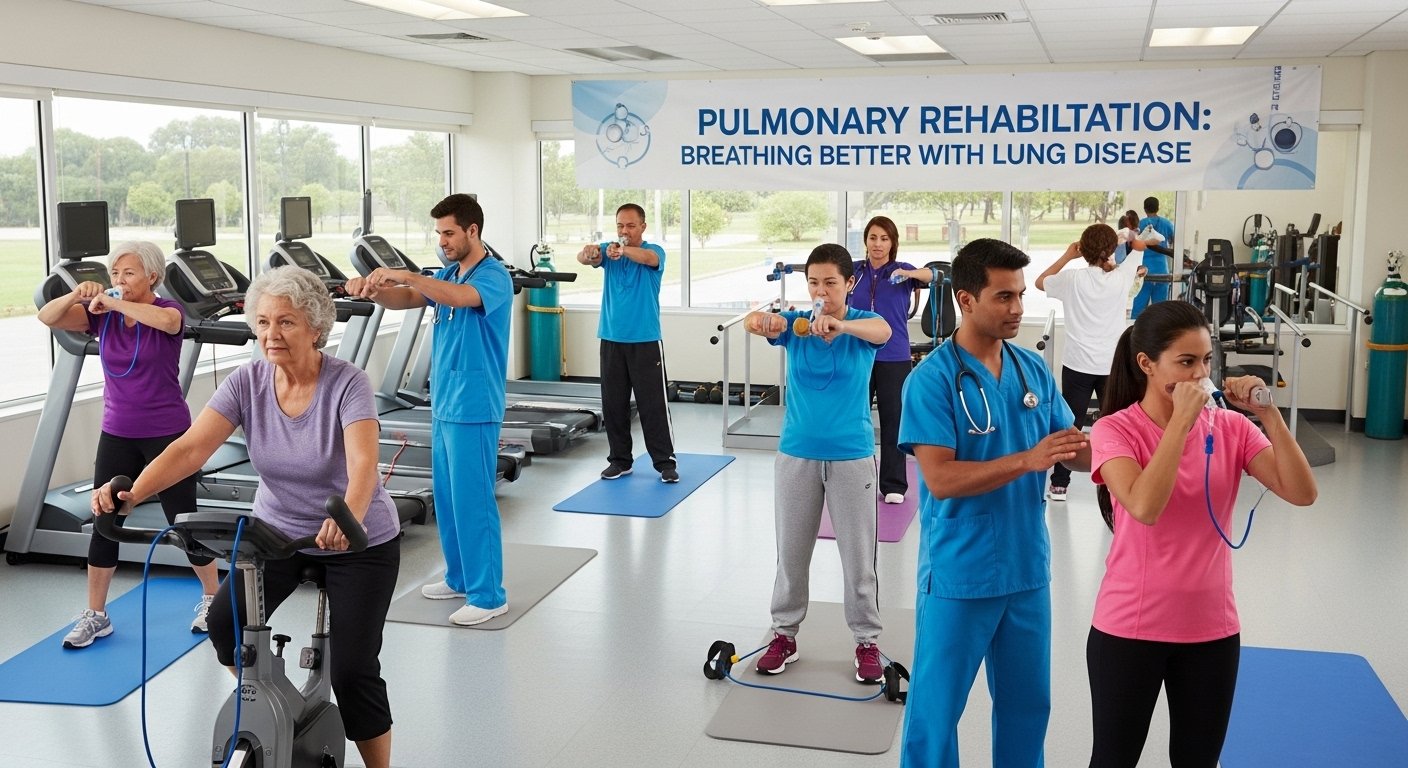
Pulmonary rehabilitation is a comprehensive, evidence-based program of supervised exercise training, education, and behavioral intervention that improves physical functioning, reduces dyspnea (breathlessness), and enhances quality of life for patients with chronic respiratory conditions. For patients with COPD, pulmonary rehabilitation is among the most effective treatments available — producing greater symptom improvement and exercise capacity gains than any single medication. This guide explains what pulmonary rehabilitation involves and who should participate.
Components of Pulmonary Rehabilitation
Exercise Training
The core of pulmonary rehabilitation — supervised endurance exercise (treadmill walking, cycling), strength training, and respiratory muscle training — conducted under monitoring with supplemental oxygen available as needed. Exercise training improves peripheral muscle conditioning, reducing the oxygen demand of activity and breaking the dyspnea-inactivity-deconditioning cycle that progressively limits COPD patients.
Breathing Techniques
Pursed-lip breathing (slowing exhalation through pursed lips) prolongs expiratory time, reducing dynamic hyperinflation — the breath-trapping that makes COPD breathlessness so distressing. Diaphragmatic breathing, coordinated breathing with activity, and energy conservation techniques are taught by respiratory therapists and physical therapists.
Education and Self-Management
COPD disease education, medication (particularly inhaler) technique review, exacerbation recognition and action plans, smoking cessation counseling, nutrition guidance, and travel oxygen planning are all addressed through the educational component of pulmonary rehabilitation programs.
Who Should Attend
Pulmonary rehabilitation benefits patients with COPD, interstitial lung disease, pulmonary hypertension, pre- and post-lung surgery, and other chronic respiratory conditions who have exercise limitation, persistent dyspnea, or reduced quality of life from their lung disease — regardless of disease severity stage.
Conclusion
Pulmonary rehabilitation transforms lung disease management in ways that medications cannot match for functional improvement and symptom control. Despite its evidence base, it remains underutilized — ask your pulmonologist or primary care doctor about referral to a pulmonary rehabilitation program if you have chronic lung disease limiting your activity or quality of life.
FAQs – Pulmonary Rehabilitation
Q1. Is pulmonary rehabilitation safe for severe COPD?
A: Yes. Pulmonary rehabilitation is specifically designed for patients with significant lung disease, with monitoring adapted to accommodate severe respiratory limitation. Benefits are actually greatest in patients with more severe COPD.
Q2. How long does pulmonary rehabilitation last?
A: Standard programs run 6–12 weeks with 2–3 sessions per week. Benefits including exercise capacity and dyspnea reduction persist for months to years after program completion, though ongoing exercise maintenance is needed for sustained benefit.
Q3. Does pulmonary rehab improve lung function?
A: Pulmonary rehabilitation does not reverse or improve fixed airflow obstruction (FEV1 changes are minimal). However, it significantly improves exercise tolerance, dyspnea, and quality of life by optimizing peripheral muscle conditioning and reducing the physiological work of breathing during activity.
Q4. Is pulmonary rehabilitation covered by insurance?
A: Medicare covers pulmonary rehabilitation for COPD patients with specific criteria. Coverage for other lung conditions varies. Most private insurance plans cover pulmonary rehabilitation for medically necessary indications — verify your specific coverage before enrolling.
Q5. Can pulmonary rehab help after hospitalization for a COPD exacerbation?
A: Yes. Post-exacerbation pulmonary rehabilitation is one of the highest-impact interventions available, dramatically reducing the risk of hospitalization and death in the 12 months following a COPD exacerbation. Early referral (within 4 weeks of discharge) is recommended.
