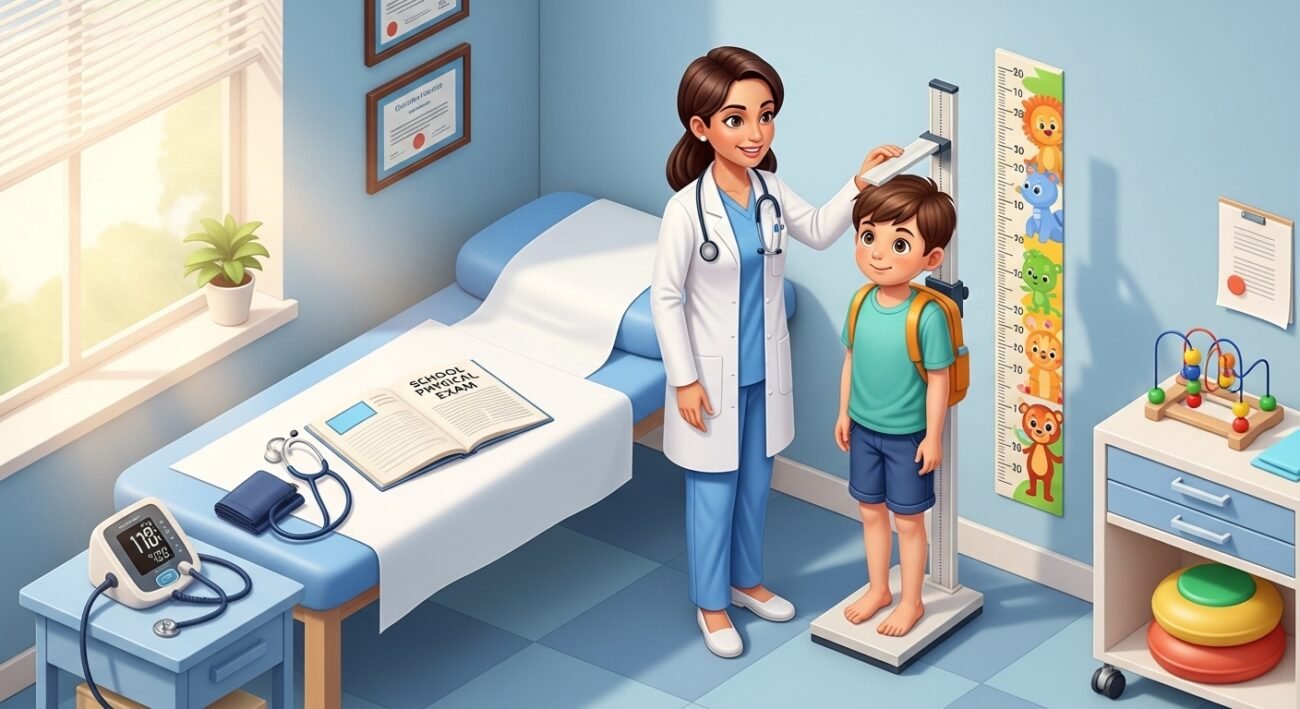
School and sports physical examinations are among the most frequently requested services at pediatric clinics — required by schools, sports leagues, and summer camps to ensure children are healthy enough to participate safely. While these exams are routine in structure, they provide valuable preventive health opportunities beyond the immediate certification purpose. This guide explains what a school/sports physical exam involves and why it matters for your child’s health.
What a School Physical Exam Covers
A standard school or sports physical includes: review of medical history (including current medications, allergies, previous surgeries, chronic conditions), vital signs (height, weight, blood pressure, heart rate), vision and hearing screening, physical examination (heart, lungs, abdomen, musculoskeletal assessment), and neurological screen. For sports physicals, particular attention is paid to the cardiovascular examination (identifying murmurs, syncope history, and family history of sudden cardiac death) and the musculoskeletal examination (identifying prior injuries that may need rehabilitation before sports participation).
Cardiovascular Screening
Sudden cardiac death in young athletes — though rare (1 in 40,000–80,000 athletes per year) — is one of the most distressing sports-related deaths. The pre-participation physical screening for cardiac conditions (hypertrophic cardiomyopathy, prolonged QT syndrome, anomalous coronary arteries) uses a 14-element screening questionnaire and cardiac auscultation. Athletes with concerning history or examination findings require ECG and cardiological evaluation before clearance.
Musculoskeletal Assessment
The two-minute orthopedic exam (TMOS) screens for musculoskeletal conditions that might affect safe sports participation. Prior injuries that have not fully healed, significant range of motion deficits, or strength asymmetries may result in conditional clearance requiring rehabilitation before full participation.
Additional Value of the Physical
The school physical is an opportunity for updating immunizations, addressing health concerns the parent or child has not yet raised, and identifying conditions (elevated blood pressure, heart murmurs, scoliosis, vision problems) that may not have been apparent between annual well-child visits. Even if a child has a recent well-child visit, a sports physical provides additional specialized musculoskeletal and cardiovascular assessment.
Conclusion
The school physical exam serves both an administrative certification purpose and a valuable preventive health function. Schedule your child’s physical well in advance of the deadline — clinics often become booked in August before school starts. Use the opportunity to address any health concerns not covered in the normal visit flow.
FAQs – School Physicals
Q1. Can a school physical replace an annual well-child visit?
A: A sports physical is focused on participation clearance and does not replace the comprehensive developmental surveillance, vaccination review, and preventive services of an annual well-child visit. Both serve important but different purposes. Ask your pediatric clinic whether a separate well-child visit is needed if a sports physical has been recently completed.
Q2. What conditions might disqualify a child from sports?
A: Absolute disqualifications are rare and include specific cardiac conditions (certain arrhythmias, recent myocarditis, high-risk hypertrophic cardiomyopathy). Conditional disqualifications apply when a condition requires further evaluation or rehabilitation before clearance. Most children with managed chronic conditions (asthma, well-controlled epilepsy) can safely participate in most sports.
Q3. How far in advance should I schedule a school physical?
A: At least 4–6 weeks before the deadline — August physicals are extremely high-demand at pediatric clinics. If a condition is identified requiring specialist follow-up before clearance, additional lead time is needed.
Q4. Does my child need immunizations at a school physical?
A: If immunizations are due (based on the recommended schedule and the child’s vaccination history), they can often be administered at the school physical visit. Bring your child’s immunization record to every clinic visit to ensure vaccinations are up to date.
Q5. My child has a chronic condition — will they be cleared for sports?
A: Most children with well-managed chronic conditions are cleared for appropriate sports participation. The physical specifically evaluates how the condition may affect safe participation in specific sports and what accommodations or precautions are needed. Open communication with your pediatrician about your child’s condition and intended sport ensures appropriate guidance.
