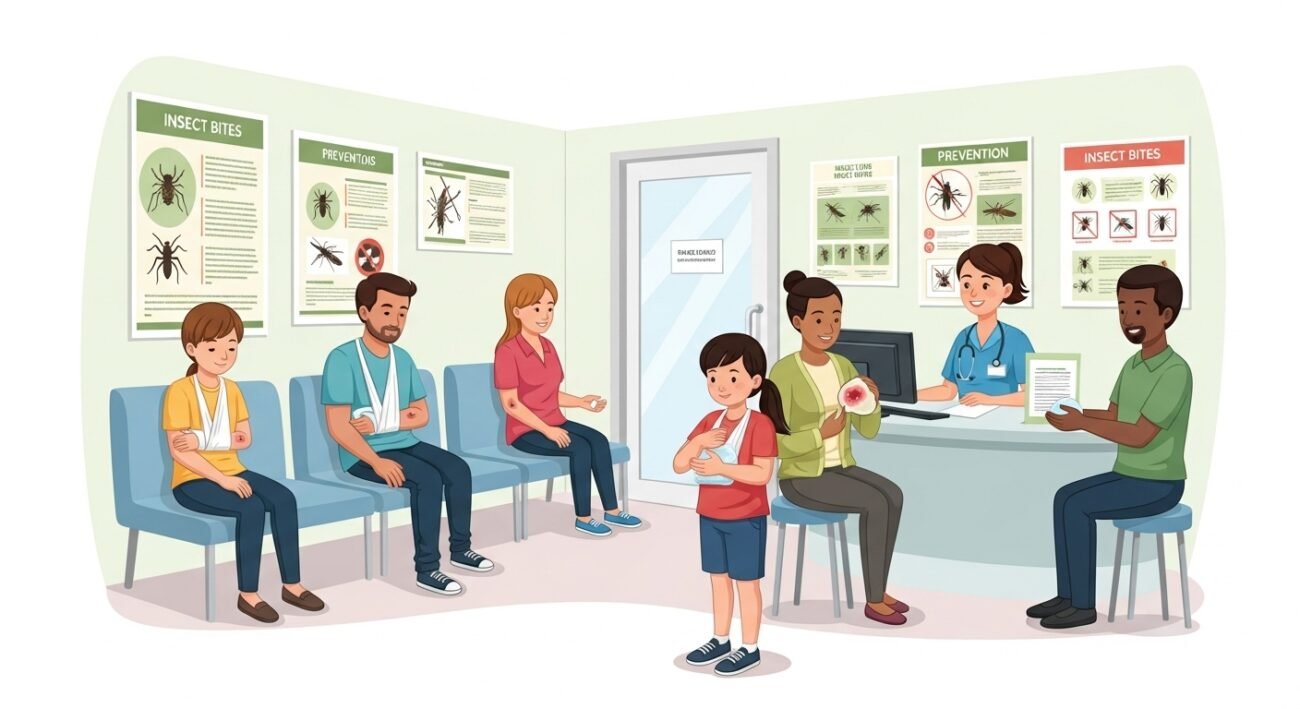
Insect bites and stings — from mosquitoes, ticks, bees, wasps, hornets, spiders, and other arthropods — are extremely common and typically minor. However, some bites and stings carry significant medical risks: allergic reactions ranging from local to anaphylaxis, transmitted infections (Lyme disease from ticks, West Nile virus from mosquitoes), and envenomation from venomous species. Medical clinics evaluate and manage the full spectrum of insect-related injuries, from local reactions to systemic illness. This guide explains clinical management of bites and stings.
Bee and Wasp Stings
Most stings cause local pain, redness, and swelling — managed with cold application, elevation, and OTC antihistamines or ibuprofen. Removing the stinger (by scraping away from the sting site, not squeezing) reduces venom delivered. Large local reactions — swelling that extends beyond the immediate area and lasts 24–48 hours — are common but not dangerous. Systemic allergic reactions (anaphylaxis) require immediate epinephrine and emergency evaluation. Patients with a history of systemic reactions should carry epinephrine auto-injectors and undergo allergy desensitization evaluation.
Tick Bites and Lyme Disease
Tick removal (with fine-tipped tweezers, grasping as close to the skin surface as possible and pulling steadily upward) is the first priority. Lyme disease — transmitted primarily by deer ticks (Ixodes scapularis) in the northeastern and midwestern US — develops after infected tick bites and presents with the characteristic expanding bullseye rash (erythema migrans) in 70–80% of cases. Single-dose doxycycline prophylaxis is indicated for high-risk deer tick bites (attached over 36 hours, in Lyme-endemic areas). Established Lyme disease is treated with 2–4 week courses of doxycycline or amoxicillin.
Spider Bites
Most spider bites cause minor local reactions. Black widow bites can cause severe systemic symptoms (muscle cramps, rigidity, hypertension). Brown recluse bites can cause progressive local tissue necrosis. Evaluation at a clinic is appropriate for bites with significant local reaction, evidence of skin breakdown, or systemic symptoms.
Conclusion
Most insect bites and stings are minor and manageable without clinic evaluation. Seek clinic attention for signs of infection (expanding redness, warmth, pus), systemic symptoms after any bite or sting, embedded ticks in endemic areas, bullseye rash, or prior history of anaphylaxis. The key to insect bite management is recognizing the minority of cases that require clinical attention and the specific diseases transmitted by specific insects in your geographic area.
FAQs – Insect Bites and Stings
Q1. How do I know if a tick bite needs medical attention?
A: Remove the tick properly and monitor the bite site for 30 days. See a clinic if: you develop a bullseye rash (erythema migrans), fever, joint pain, or other systemic symptoms; the tick was attached over 36 hours (prophylactic doxycycline may be indicated); or you are unable to completely remove the tick.
Q2. What is anaphylaxis and how do I recognize it from an insect sting?
A: Anaphylaxis is a severe systemic allergic reaction typically occurring within minutes of a sting. Signs include hives or flushing distant from the sting site, swelling of the face or throat, difficulty breathing, rapid pulse, dizziness, and feeling of impending doom. Anaphylaxis is a life-threatening emergency — use epinephrine immediately and call 911.
Q3. Does Lyme disease always cause a bullseye rash?
A: No — approximately 20–30% of Lyme disease patients do not develop the classic bullseye rash. In these patients, flu-like symptoms (fatigue, fever, headache, muscle and joint aches) in the weeks following a tick bite in an endemic area should prompt clinical evaluation and Lyme disease testing.
Q4. Can mosquito bites transmit disease in the United States?
A: Yes. West Nile virus (causing fever and in severe cases encephalitis) is the most common mosquito-borne disease in the US. Eastern equine encephalitis (EEE) is rare but has very high mortality. Zika and dengue can be locally transmitted in Florida and Texas. Using insect repellent containing DEET or picaridin provides effective protection.
Q5. What is cellulitis and how is it related to insect bites?
A: Cellulitis is a bacterial skin infection most commonly caused by staphylococci and streptococci. Insect bites create skin entry points for these bacteria. Signs of bite-related cellulitis include expanding redness (beyond the bite), increasing warmth, swelling, and sometimes fever. Antibiotic treatment is required — prompt clinic evaluation prevents progression to serious infection.
