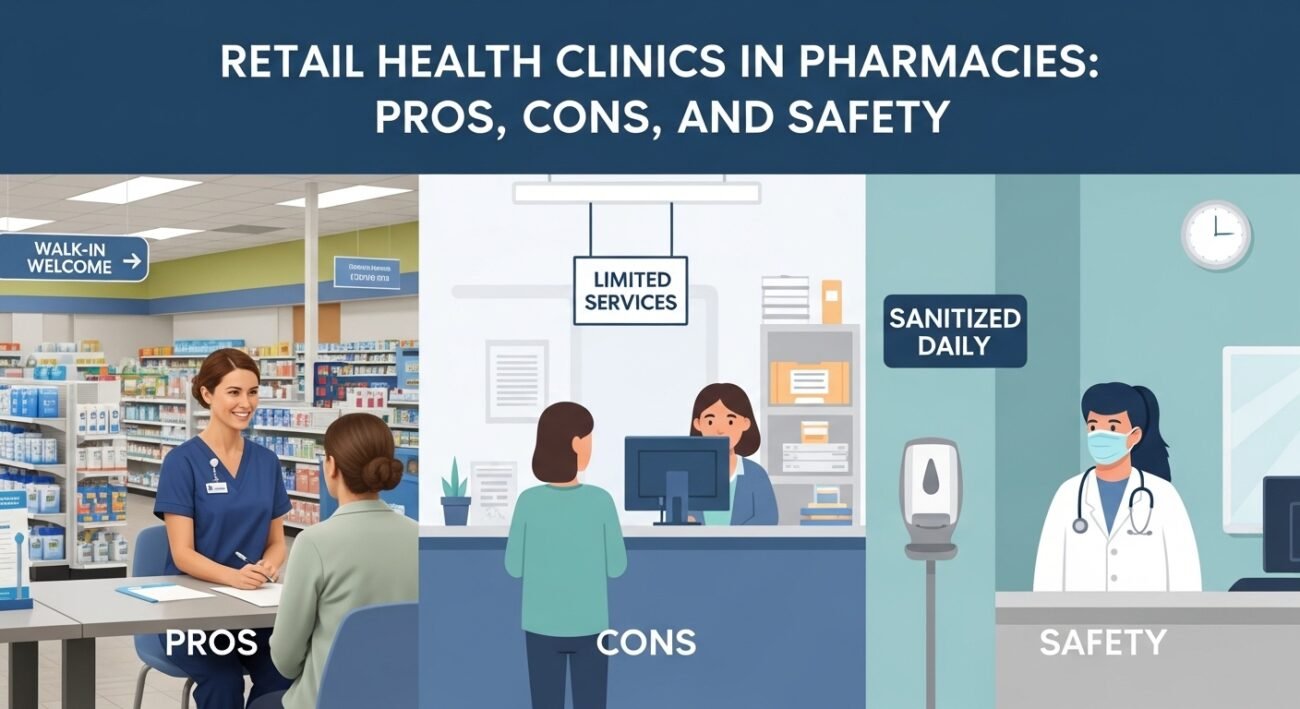
Retail Health Clinics in Pharmacies: Pros, Cons, and Safety is a common reason patients contact a medical clinic. Whether you are new to the healthcare system or managing multiple conditions, it helps to understand what clinics can do in an outpatient visit, what requires a specialist, and what should be handled urgently. This article uses plain language to explain typical clinic workflows, key questions to ask, and how to partner with your care team. The focus keyword for this piece is retail health clinic pharmacy pros cons safety, but the guidance is written for readers, not search engines — clear structure should make the information easy to scan and share with family members.
How clinics evaluate your concern during the visit
When people look for guidance on retail health clinic pharmacy pros cons safety in a medical clinic setting, they are usually trying to connect symptoms, tests, or medications to a clear plan. In everyday practice, clinicians translate evidence-based guidelines into steps that fit your health history, preferences, and local resources. This section supports that decision-making process.
Clinics differ in staffing, equipment, and referral relationships, so two patients with similar concerns may follow slightly different workflows. What should stay consistent is safety: red-flag symptoms are evaluated promptly, medications are reviewed for interactions, and follow-up is documented so nothing falls through the cracks. If you are unsure whether your concern belongs in primary care, urgent care, or the emergency department, ask — triage staff can often guide you in minutes. If you use a patient portal, send a brief message before the visit summarizing your top questions; many teams can pre-order labs or route you to the right specialist.
For topics related to retail health clinic pharmacy pros cons safety, documentation matters because it helps the next clinician understand what was tried, what improved, and what still needs attention. Bring an updated medication list, recent labs if you have them, and a short timeline of symptoms. That preparation turns a brief visit into a higher-yield visit, especially when time is limited.
Your clinic team may also coordinate with nursing, pharmacy, social work, or care management depending on complexity. That teamwork is especially helpful when retail health clinic pharmacy pros cons safety touches medication access, transportation, housing stability, or caregiver support.
Tests, monitoring, and safety checks you may encounter
When people look for guidance on retail health clinic pharmacy pros cons safety in a medical clinic setting, they are usually trying to connect symptoms, tests, or medications to a clear plan. In everyday practice, clinicians translate evidence-based guidelines into steps that fit your health history, preferences, and local resources. This section supports that decision-making process.
Clinics differ in staffing, equipment, and referral relationships, so two patients with similar concerns may follow slightly different workflows. What should stay consistent is safety: red-flag symptoms are evaluated promptly, medications are reviewed for interactions, and follow-up is documented so nothing falls through the cracks. If you are unsure whether your concern belongs in primary care, urgent care, or the emergency department, ask — triage staff can often guide you in minutes. If you are pregnant, immunocompromised, or caring for an infant, mention it early so precautions and testing align with your risk level.
For topics related to retail health clinic pharmacy pros cons safety, documentation matters because it helps the next clinician understand what was tried, what improved, and what still needs attention. Bring an updated medication list, recent labs if you have them, and a short timeline of symptoms. That preparation turns a brief visit into a higher-yield visit, especially when time is limited.
Across outpatient medicine, section 2 of a typical visit plan often includes patient education: written instructions, reputable websites, and clear warning signs for when to call. Ask for information in the format you learn best from — diagrams, bullet lists, or translated materials.
Notes your care team may record in the chart
Clinicians often anchor these discussions to objective data — vitals, exam findings, and, when appropriate, point-of-care tests or send-out labs. For questions involving retail health clinic pharmacy pros cons safety, the goal is not only a diagnosis label but a practical path: what to do today, what to monitor at home, and when to escalate. Ask what watchful waiting would look like compared with starting treatment now, and which side effects should trigger a phone call.
Treatment planning, medications, and self-management
When people look for guidance on retail health clinic pharmacy pros cons safety in a medical clinic setting, they are usually trying to connect symptoms, tests, or medications to a clear plan. In everyday practice, clinicians translate evidence-based guidelines into steps that fit your health history, preferences, and local resources. This section supports that decision-making process.
Clinics differ in staffing, equipment, and referral relationships, so two patients with similar concerns may follow slightly different workflows. What should stay consistent is safety: red-flag symptoms are evaluated promptly, medications are reviewed for interactions, and follow-up is documented so nothing falls through the cracks. If you are unsure whether your concern belongs in primary care, urgent care, or the emergency department, ask — triage staff can often guide you in minutes. If cost is a barrier, ask about generic alternatives, payment plans, or pharmacy assistance programs your clinic partners with.
For topics related to retail health clinic pharmacy pros cons safety, documentation matters because it helps the next clinician understand what was tried, what improved, and what still needs attention. Bring an updated medication list, recent labs if you have them, and a short timeline of symptoms. That preparation turns a brief visit into a higher-yield visit, especially when time is limited.
Your clinic team may also coordinate with nursing, pharmacy, social work, or care management depending on complexity. That teamwork is especially helpful when retail health clinic pharmacy pros cons safety touches medication access, transportation, housing stability, or caregiver support.
Follow-up, red flags, and coordination with specialists
When people look for guidance on retail health clinic pharmacy pros cons safety in a medical clinic setting, they are usually trying to connect symptoms, tests, or medications to a clear plan. In everyday practice, clinicians translate evidence-based guidelines into steps that fit your health history, preferences, and local resources. This section supports that decision-making process.
Clinics differ in staffing, equipment, and referral relationships, so two patients with similar concerns may follow slightly different workflows. What should stay consistent is safety: red-flag symptoms are evaluated promptly, medications are reviewed for interactions, and follow-up is documented so nothing falls through the cracks. If you are unsure whether your concern belongs in primary care, urgent care, or the emergency department, ask — triage staff can often guide you in minutes. If you use a patient portal, send a brief message before the visit summarizing your top questions; many teams can pre-order labs or route you to the right specialist.
For topics related to retail health clinic pharmacy pros cons safety, documentation matters because it helps the next clinician understand what was tried, what improved, and what still needs attention. Bring an updated medication list, recent labs if you have them, and a short timeline of symptoms. That preparation turns a brief visit into a higher-yield visit, especially when time is limited.
Across outpatient medicine, section 4 of a typical visit plan often includes patient education: written instructions, reputable websites, and clear warning signs for when to call. Ask for information in the format you learn best from — diagrams, bullet lists, or translated materials.
Notes your care team may record in the chart
Clinicians often anchor these discussions to objective data — vitals, exam findings, and, when appropriate, point-of-care tests or send-out labs. For questions involving retail health clinic pharmacy pros cons safety, the goal is not only a diagnosis label but a practical path: what to do today, what to monitor at home, and when to escalate. Ask what watchful waiting would look like compared with starting treatment now, and which side effects should trigger a phone call.
Conclusion
Outpatient clinics remain the backbone of community health because they combine prevention, diagnosis, chronic disease management, and coordination. For retail health clinics in pharmacies: pros, cons, and safety, the best outcomes usually come from steady communication, realistic expectations about tests and treatments, and follow-through on the plan you agreed to. If something changes — new symptoms, a medication side effect, or a barrier like transportation — update your team early. Searching for retail health clinic pharmacy pros cons safety should lead you to trustworthy next steps; your clinician personalizes those steps to your body, your values, and your context.
FAQs – Retail Clinics
Q1. What should I bring to a clinic visit about retail health clinics in pharmacies: pros, cons, and safety?
A: Bring identification, insurance cards, an updated medication list (including over-the-counter drugs and supplements), allergies, and a short list of prioritized questions. If you track symptoms at home, bring numbers or photos your clinician can review.
Q2. How quickly should I expect test results?
A: Many labs return within 24–72 hours, but pathology, cultures, and specialized tests can take longer. Ask how results will arrive — patient portal, phone call, or follow-up visit — and what to do if symptoms worsen while you wait.
Q3. Will my primary care clinic manage this long-term, or will I need a specialist?
A: It depends on complexity, severity, and clinic capabilities. Primary care often co-manages with specialists, handling refills, preventive care, and stable monitoring while specialists focus on advanced procedures or high-risk plans.
Q4. What if I cannot afford medications or follow-up visits?
A: Ask about generics, 90-day fills, patient assistance programs, sliding-scale fees, or referral to a federally qualified health center. Pharmacists can sometimes suggest lower-cost therapeutic alternatives your prescriber can approve.
Q5. Is information about retail health clinic pharmacy pros cons safety online enough to self-treat?
A: Education helps, but online articles cannot examine you or review your full chart. Use this guide to prepare questions and understand options, then confirm decisions with a licensed clinician who knows your history.
