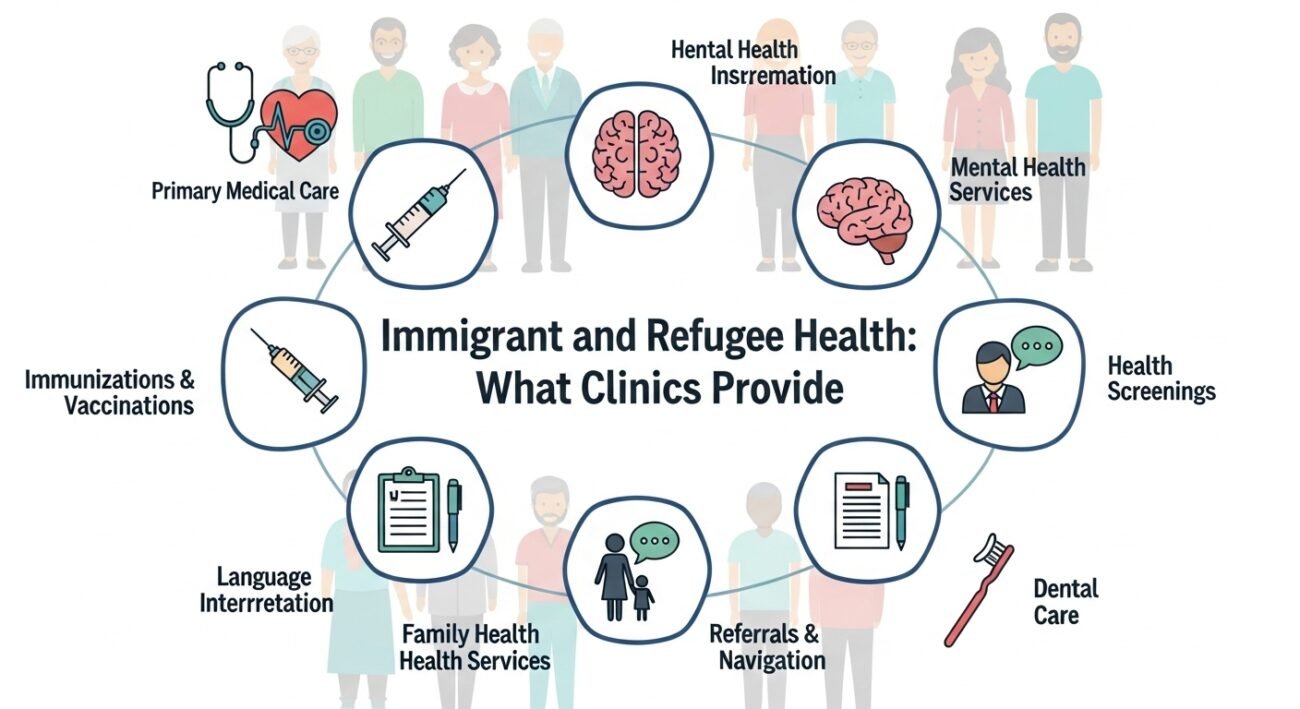
Immigrants and refugees — individuals who have relocated internationally, often under circumstances of hardship, displacement, or persecution — have unique health needs that extend beyond those of the general population. They may arrive with untreated chronic conditions, infectious diseases prevalent in their countries of origin, the health consequences of trauma and displacement, and barriers to healthcare access including language, insurance, and cultural differences. Community health clinics and organizations like ORR-funded refugee health programs provide specialized, culturally responsive care for these populations. This guide explains what clinics provide for immigrant and refugee patients.
Refugee Health Screening
Newly arrived refugees receive comprehensive health assessments coordinated through state and local health departments — typically within 90 days of arrival. These assessments screen for infectious diseases (tuberculosis, hepatitis B, HIV, intestinal parasites, malaria in those from endemic regions), nutritional deficiencies, dental and vision problems, mental health conditions, and chronic diseases. Vaccination review ensures refugees receive recommended immunizations.
Infectious Disease Considerations
Tuberculosis — prevalence remains high in many regions of origin for refugees and immigrants. Pre-immigration screening identifies active TB; LTBI (latent TB) requires treatment to prevent future active TB. Intestinal parasites (particularly strongyloides, which can cause severe infection in immunocompromised patients) are treated empirically in some refugee populations. Hepatitis B and C require testing and follow-up care.
Mental Health
Trauma exposure — including torture, persecution, displacement, and dangerous migration — creates high rates of PTSD, depression, and anxiety in refugee and immigrant populations. Culturally responsive mental health care — with trained interpreters, cultural humility, and trauma-informed approaches — is essential. Many refugee resettlement organizations connect newcomers with mental health professionals experienced in this population’s specific needs.
Language and Cultural Access
Federal law requires healthcare facilities receiving federal funding to provide language access services at no cost to limited English proficient patients. Professional medical interpreters (not family members, who should not be used due to accuracy and confidentiality concerns) ensure effective communication. Culturally responsive care respects healthcare beliefs, dietary practices, and family dynamics that differ across cultural backgrounds.
Conclusion
Immigrant and refugee patients deserve healthcare that acknowledges their unique health history, addresses conditions prevalent in their regions of origin, provides culturally and linguistically appropriate services, and responds with compassion to the health consequences of displacement and trauma. Community health centers are often the most accessible and culturally experienced healthcare settings for recently arrived immigrants and refugees.
FAQs – Immigrant and Refugee Health
Q1. Do immigrants need special vaccinations upon arriving in the US?
A: Vaccination requirements vary. Legal permanent residents must meet vaccine requirements per the immigration medical exam. Refugees receive vaccination assessments and catch-up immunizations within 90 days of arrival. Undocumented immigrants are not required to have specific vaccinations but benefit from the same immunization schedule as all residents.
Q2. Can undocumented immigrants access healthcare clinics?
A: Federally Qualified Health Centers (FQHCs) serve patients regardless of immigration status. Emergency Medicaid provides emergency medical services for undocumented immigrants regardless of status. Free clinics and community health organizations serve undocumented patients. Regular insurance-funded healthcare is more limited for undocumented individuals in most states.
Q3. What is a medical interpreter and why are they important?
A: Professional medical interpreters are trained in medical terminology and healthcare interpretation in specific languages. They ensure accurate communication between patients and providers — critical for obtaining accurate medical history, communicating diagnoses, and ensuring informed consent. Using untrained interpreters (including family members) significantly increases medical error risk.
Q4. What is “cultural humility” in healthcare?
A: Cultural humility is an approach to cross-cultural healthcare involving ongoing self-reflection and learning, recognizing power imbalances, and committing to respectful partnership with patients from different cultural backgrounds rather than assuming expertise about any particular culture. It contrasts with “cultural competence” (the assumption that cultures can be “learned”) and more accurately reflects the complexity of culturally responsive care.
Q5. Where can refugees find healthcare services?
A: Resettlement agencies (Catholic Charities, IRC, World Relief, others) connect newly arrived refugees with healthcare services. State refugee health programs coordinate initial health assessments. FQHCs provide ongoing primary care. The Office of Refugee Resettlement (ORR) website provides state-by-state resources.
