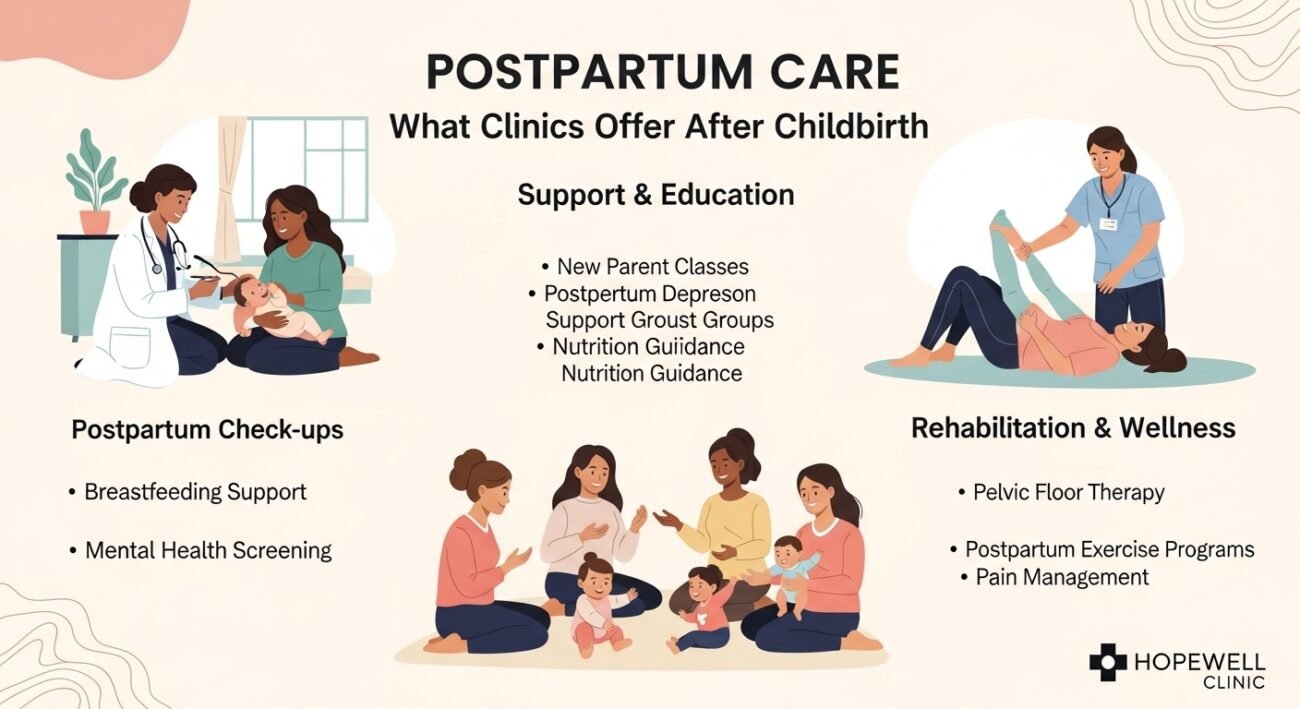
The postpartum period — the weeks following childbirth — involves significant physical, hormonal, and emotional transitions that require clinical attention and support. Historically, postpartum care consisted of a single 6-week visit that was entirely inadequate for the complexity of this period. Current recommendations call for earlier and more frequent postpartum contact, recognizing that the risks of postpartum hemorrhage, infection, depression, and cardiovascular complications are highest in the first days and weeks after delivery. This guide explains comprehensive postpartum clinic care.
Physical Recovery Monitoring
Postpartum clinic visits assess wound healing (perineal lacerations, episiotomy, cesarean incision), uterine involution (return of the uterus to pre-pregnant size), lochia (postpartum bleeding — normal transition from bright red to pink to yellow-white discharge over 4–6 weeks), and blood pressure (monitoring for postpartum preeclampsia, which can develop up to 6 weeks after delivery). Heavy bleeding, fever, foul-smelling discharge, painful urination, severe headache, or visual changes require immediate evaluation.
Postpartum Depression Screening
Postpartum depression (PPD) affects 10–15% of new mothers — a significant clinical condition involving persistent sadness, anxiety, inability to bond with the baby, and in severe cases, thoughts of harm. PPD is distinct from the “baby blues” (mild transient mood changes in the first 2 weeks). The Edinburgh Postnatal Depression Scale is administered at postpartum visits to screen for PPD. Treatment includes therapy, medication (SSRIs are compatible with breastfeeding), and support resources.
Contraception Counseling
Return of fertility after childbirth can occur as early as 3 weeks postpartum (earlier without breastfeeding). Contraception counseling is an important component of postpartum care — helping new parents choose a method that accommodates breastfeeding, timing of future pregnancy plans, and recovery from delivery. Long-acting methods (IUDs, implants) can be placed immediately postpartum in many clinical settings.
Conclusion
Comprehensive postpartum care is as important as prenatal care — the postpartum period carries its own significant medical risks and emotional challenges that deserve systematic clinical attention. Attend your scheduled postpartum visits, report any concerning symptoms promptly, and speak openly with your provider about your emotional well-being as well as your physical recovery. You deserve support through the entire journey of parenthood, not just through delivery.
FAQs – Postpartum Care
Q1. When is the first postpartum visit?
A: Current ACOG recommendations call for initial contact (in-person or telehealth) within the first 3 weeks postpartum, followed by a comprehensive visit at 4–6 weeks. Earlier visits are recommended for women with specific risk factors (cesarean section, hypertension, mental health concerns).
Q2. What is postpartum preeclampsia?
A: Preeclampsia can develop for the first time or worsen in the postpartum period — most commonly in the first week, but occasionally up to 6 weeks after delivery. Symptoms include severe headache, visual changes, upper abdominal pain, and elevated blood pressure. This is a medical emergency requiring immediate evaluation.
Q3. When can I exercise after giving birth?
A: Gentle walking and pelvic floor exercises can begin within days of uncomplicated vaginal delivery. More strenuous exercise is generally recommended after 6 weeks and clearance at the postpartum visit. After cesarean section, more conservative return-to-activity timelines apply — discuss with your provider.
Q4. Is it normal to feel depressed after having a baby?
A: “Baby blues” — mild mood swings, tearfulness, and emotional sensitivity in the first 1–2 weeks — affect up to 80% of new mothers and resolve spontaneously. Postpartum depression involves more persistent, significant symptoms that impair functioning and do not resolve on their own. If you feel overwhelmed, persistently sad, or unable to connect with your baby beyond 2 weeks postpartum, contact your clinic.
Q5. When does postpartum bleeding stop?
A: Lochia (postpartum discharge) typically lasts 4–6 weeks — transitioning from bright red and heavier in the first days to lighter pink, then yellowish-white. Soaking more than one pad per hour, passing large clots, or returning to bright red bleeding after it had lightened warrants immediate clinic contact.
