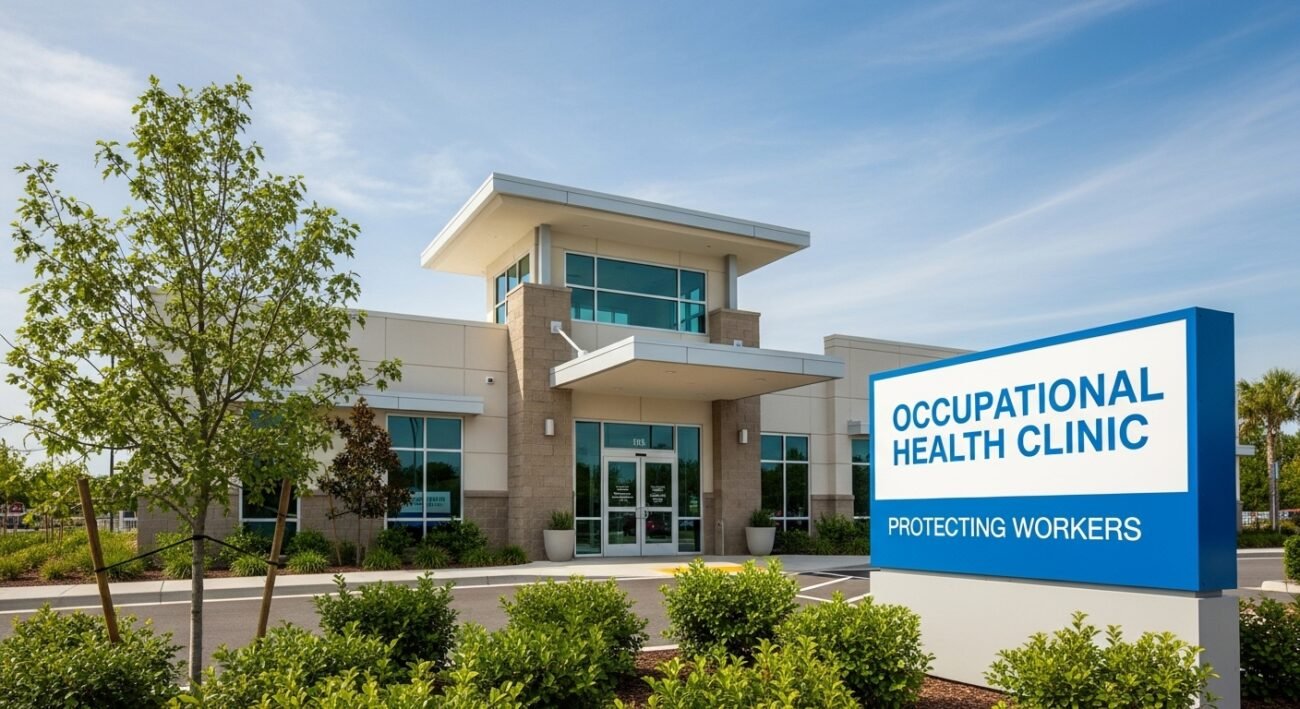
Occupational health clinics specialize in the relationship between work and health — both preventing and treating injuries and illnesses that arise from or are affected by occupational exposures and activities. They serve employers, employees, and workers’ compensation systems, providing a range of services from pre-employment health assessments to workplace injury treatment to occupational disease surveillance. This guide explains what occupational health clinics offer and how they protect workers.
Services Provided
Pre-Employment and Fitness-for-Duty Evaluations
Medical clearance examinations ensure workers can safely perform essential job functions. For safety-sensitive positions (drivers, pilots, emergency responders), specific regulatory physicals (DOT CDL physicals, FAA medicals) certify fitness for duty. Fitness-for-duty evaluations assess whether current medical conditions or medications affect an employee’s ability to safely perform their job following illness, injury, or concern about job performance.
Workplace Injury Treatment
Occupational health clinics provide prompt evaluation and treatment of work-related injuries — sprains, lacerations, fractures, chemical exposures — facilitating workers’ compensation reporting, coordinating specialist care when needed, and supporting return-to-work planning with modified duty accommodations when appropriate.
Occupational Disease Surveillance
Medical surveillance programs monitor workers exposed to specific occupational hazards — lead, asbestos, silica, noise, chemicals — through periodic biological monitoring (blood lead levels, audiometry, pulmonary function tests) to detect health effects before they become irreversible. OSHA standards mandate specific medical surveillance programs for regulated hazards.
Drug and Alcohol Testing
Occupational health clinics conduct workplace drug and alcohol testing for safety-sensitive industries under DOT and employer-specific programs — pre-employment, random, post-accident, and reasonable suspicion testing performed according to federal and employer guidelines.
Conclusion
Occupational health clinics protect workers’ health by treating injury and illness, preventing occupational disease through surveillance, and ensuring that work demands and worker health are appropriately matched. If you have been injured at work, your employer’s occupational health clinic is the appropriate first point of care for both medical treatment and workers’ compensation documentation.
FAQs – Occupational Health
Q1. Must I use my employer’s occupational health clinic for a work injury?
A: Requirements vary by state workers’ compensation law and employer policy. Some states require initial treatment at employer-designated facilities for workers’ compensation coverage to apply. Others allow worker choice from the outset. Know your state’s rules and your employer’s policy before choosing where to seek treatment.
Q2. What is a DOT physical?
A: The Department of Transportation (DOT) physical exam certifies commercial motor vehicle (CMV) drivers meet medical standards for safe driving — evaluating vision, hearing, cardiovascular health, neurological function, and medication use that might affect driving safety. DOT physicals are required every 2 years (more frequently for some conditions).
Q3. Can my employer know what is discussed at an occupational health clinic visit?
A: Occupational health providers communicate the ability or inability to perform specific job functions to employers — but not underlying diagnoses or medical details, which are protected by HIPAA. Employers learn whether you can work, with what restrictions, not the specific medical reasons.
Q4. What is repetitive strain injury?
A: Repetitive strain injuries (RSIs) — also called work-related musculoskeletal disorders (WMSDs) — result from cumulative trauma to muscles, tendons, and nerves from repetitive motions, awkward postures, and force. Carpal tunnel syndrome, rotator cuff tendinopathy, and lower back pain are common RSIs. Prevention through ergonomic assessment and job rotation is the most effective strategy.
Q5. What vaccinations do healthcare workers need?
A: OSHA and CDC recommend healthcare workers receive hepatitis B, annual influenza, MMR (if not immune), varicella (if not immune), Tdap, COVID-19, and for those with certain exposures, meningococcal and rabies vaccines. Occupational health departments manage healthcare worker vaccination programs and exposure follow-up.
