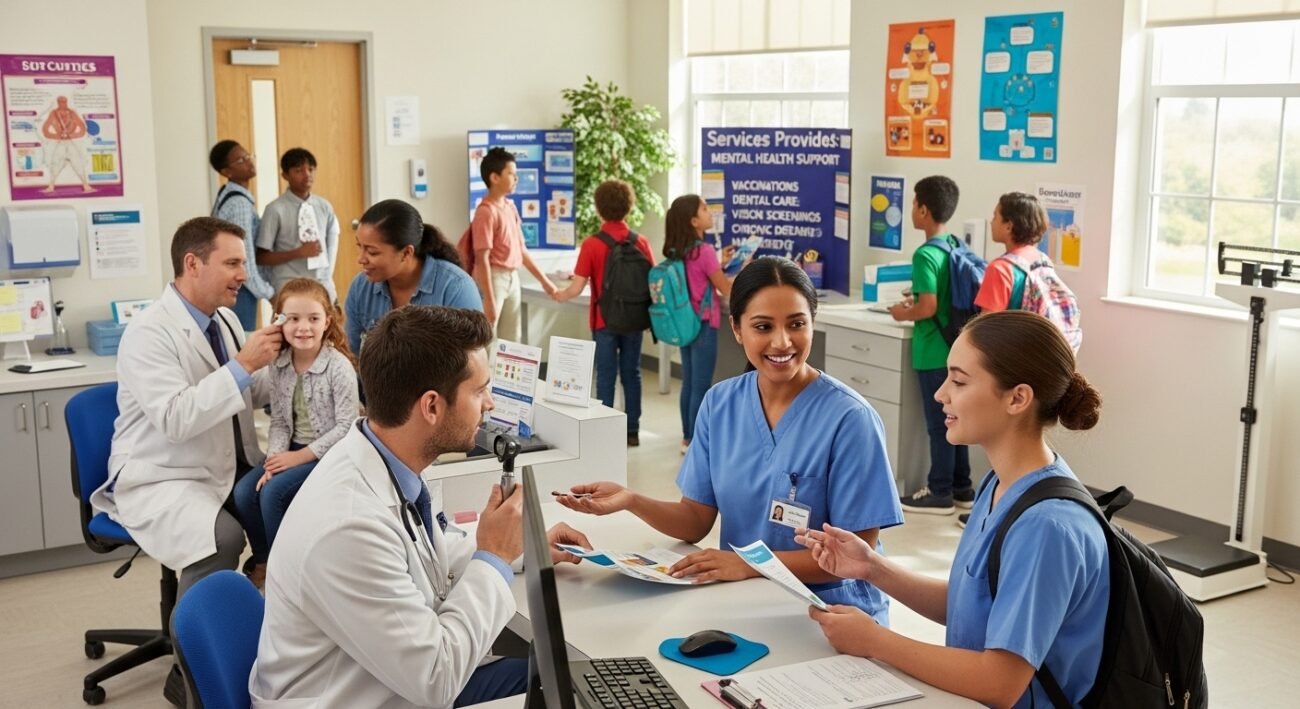
School-based health centers (SBHCs) — healthcare clinics located in or adjacent to schools providing primary care, mental health, and preventive services directly to students — represent one of the most effective strategies for reaching adolescents who would not otherwise access healthcare. Approximately 3,000 SBHCs operate across the United States, serving primarily high-poverty urban and rural schools where students face the greatest barriers to care. This guide explains what school-based health centers provide and why they matter.
Services Typically Provided
- Primary care — acute illness evaluation and treatment, physical examinations, immunizations
- Mental health services — individual counseling, crisis intervention, substance use assessment
- Reproductive health — confidential counseling, contraception, STI testing, pregnancy testing
- Chronic disease management — asthma management, diabetes monitoring, medication dispensing
- Dental and vision services (at some centers)
- Health education and promotion
- Case management and referrals to community services
Why School-Based Care Is So Effective
Removing barriers — transportation, cost, parental scheduling, fear of seeking care at traditional clinics — makes healthcare accessible to students who would not otherwise receive it. SBHC users consistently show higher rates of preventive care, better chronic disease control, fewer emergency department visits, reduced school absences, and improved academic performance compared to non-users. The school setting provides unparalleled access to the adolescent population at the point where health behaviors that affect lifetime outcomes are being established.
Confidentiality
SBHCs operate under state laws governing adolescent confidentiality for reproductive health, mental health, and substance use services — the same laws that apply to any healthcare provider. Students can access confidential services without parental notification for conditions covered by minor consent laws in their state. This confidentiality is essential for adolescents who need to address sensitive health concerns without fear that parents will be notified.
Conclusion
School-based health centers bring healthcare where young people already are — eliminating the barriers that prevent so many adolescents from accessing the care they need. If your school has an SBHC, encourage its use for both routine healthcare and sensitive health concerns that students might not otherwise address. These clinics have demonstrated real, measurable impacts on student health and academic achievement.
FAQs – School-Based Health Centers
Q1. Do I need parental consent for my child to use the school health clinic?
A: Most SBHCs require parental enrollment consent for primary care services. Some services (mental health counseling, reproductive health, substance use assessment) may be provided without parental notification under state minor consent laws. Individual SBHC policies vary — contact your school’s health center directly.
Q2. Who staffs school-based health centers?
A: SBHCs are typically staffed by nurse practitioners, physician assistants, pediatricians, social workers, and counselors. Mental health providers are often the most utilized staff at many centers. Staffing varies by center size and funding.
Q3. Are SBHC services free?
A: Many SBHCs provide services at no cost to students, funded through grants, Medicaid billing, and state/local public health funding. When billing occurs, it is typically to Medicaid/CHIP without cost to the student family. Uninsured students generally receive services at no charge at most SBHCs.
Q4. What happens if a student needs care the SBHC can’t provide?
A: SBHCs provide referrals to community providers for services beyond their scope and often have case managers who facilitate these referrals and track follow-through. Transportation assistance is sometimes available for referred services.
Q5. Do SBHCs treat teachers and school staff?
A: Some SBHCs serve school staff in addition to students, particularly in underserved communities where access to care is difficult. However, the primary focus and design of SBHCs is student-centered care. Staff services vary by center.
