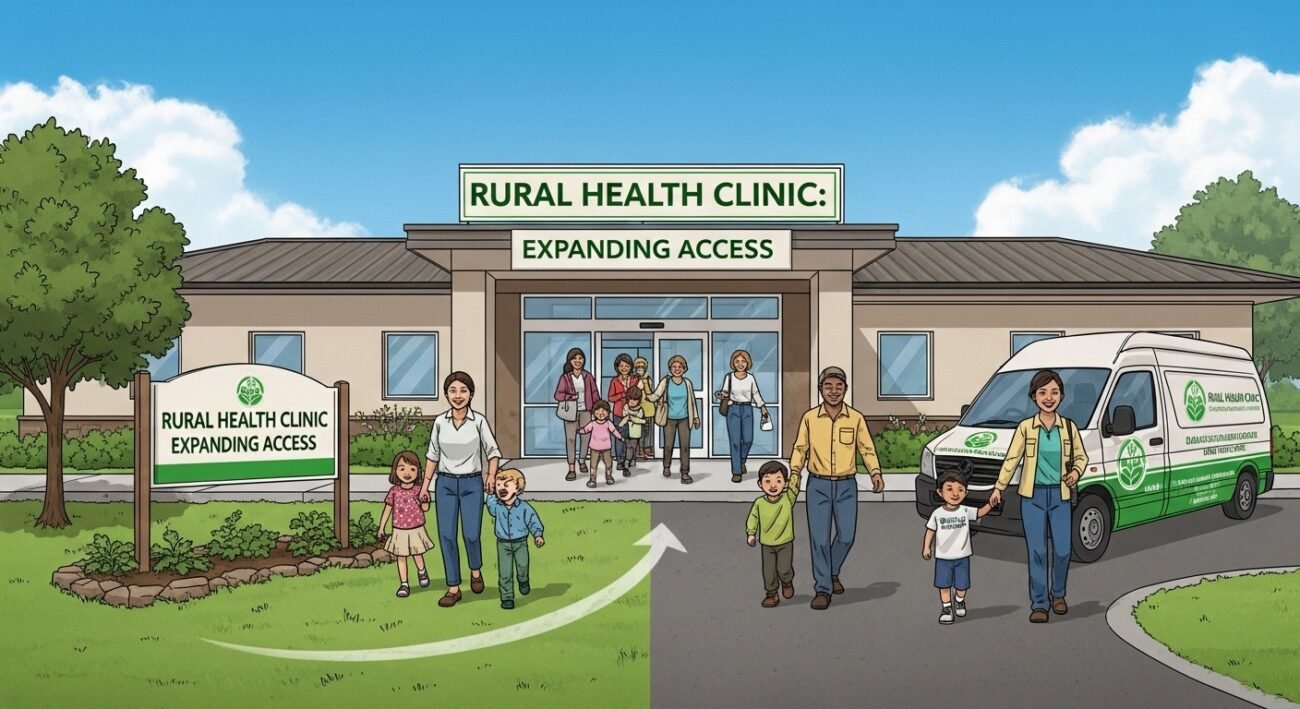
More than 60 million Americans live in rural areas, and these communities face significant healthcare access challenges: fewer physicians (particularly specialists), greater distances to care, higher rates of poverty and uninsurance, and higher rates of many chronic diseases including heart disease, diabetes, and obesity. Rural Health Clinics (RHCs) — a federally designated clinic type receiving enhanced Medicare and Medicaid reimbursement to improve rural access — are a critical component of the rural healthcare safety net. This guide explains what rural health clinics provide and how they expand healthcare access in underserved communities.
What Makes a Rural Health Clinic
RHCs are healthcare facilities in federally designated rural underserved areas that meet specific federal requirements: at least 51% of visits provided by nurse practitioners (NPs) or physician assistants (PAs) (though physicians are also part of the team), compliance with state licensing requirements, and provision of routine diagnostic laboratory services. RHCs receive enhanced per-visit reimbursement that makes it financially viable to provide care in rural markets where standard reimbursement rates may not sustain clinic operations.
Services Provided
Rural health clinics provide the same primary care services as urban practices — preventive care, chronic disease management, acute illness treatment, vaccinations, laboratory testing, and coordination of specialist care. The geographic reality of rural healthcare means that RHCs serve a broader scope of patients who might see specialists in urban settings, and that telehealth has become especially important for connecting rural patients with specialty expertise.
Telehealth in Rural Settings
Telehealth has significantly increased specialist access for rural patients — enabling patients to consult with cardiologists, neurologists, psychiatrists, and other specialists without multi-hour trips to urban centers. Rural clinics increasingly serve as telehealth “hubs” — providing the clinical setting (vital signs monitoring, basic examination) while connecting patients with distant specialists via video.
Conclusion
Rural health clinics are essential healthcare infrastructure for communities where geography and economics create significant access barriers. If you live in a rural area and lack access to consistent primary care, locating your nearest RHC or FQHC through the HRSA clinic locator (findahealthcenter.hrsa.gov) connects you with quality care in your community. Every American deserves accessible healthcare regardless of zip code.
FAQs – Rural Health Clinics
Q1. Is care at a rural health clinic less comprehensive than at an urban clinic?
A: Rural health clinics provide comprehensive primary care equivalent in quality to urban primary care. Specialist access may be more limited locally, but telehealth and referral networks increasingly bridge this gap. Rural primary care providers often have broader clinical experience from managing a wider range of conditions.
Q2. How do I find a rural health clinic?
A: Visit findahealthcenter.hrsa.gov and select “Rural Health Clinic” from the facility type filter, then search by your location. Your state’s primary care association and rural health association can also direct you to local RHC resources.
Q3. Do rural health clinics accept Medicare and Medicaid?
A: Yes. RHC designation specifically includes enhanced Medicare and Medicaid reimbursement. RHCs accept these programs as part of their federal designation requirements.
Q4. Are there enough rural health providers?
A: Rural healthcare faces significant workforce shortages, particularly in primary care, mental health, and OB-GYN. The National Health Service Corps (NHSC) provides loan repayment to clinicians who practice in underserved areas, including rural settings. Rural training programs and telehealth are addressing workforce gaps.
Q5. What is a critical access hospital?
A: Critical Access Hospitals (CAHs) are rural hospitals that receive special Medicare payment designations to maintain financial viability. They provide emergency services and limited inpatient care as the sole hospital in geographically isolated communities. They commonly operate affiliated rural health clinics.
