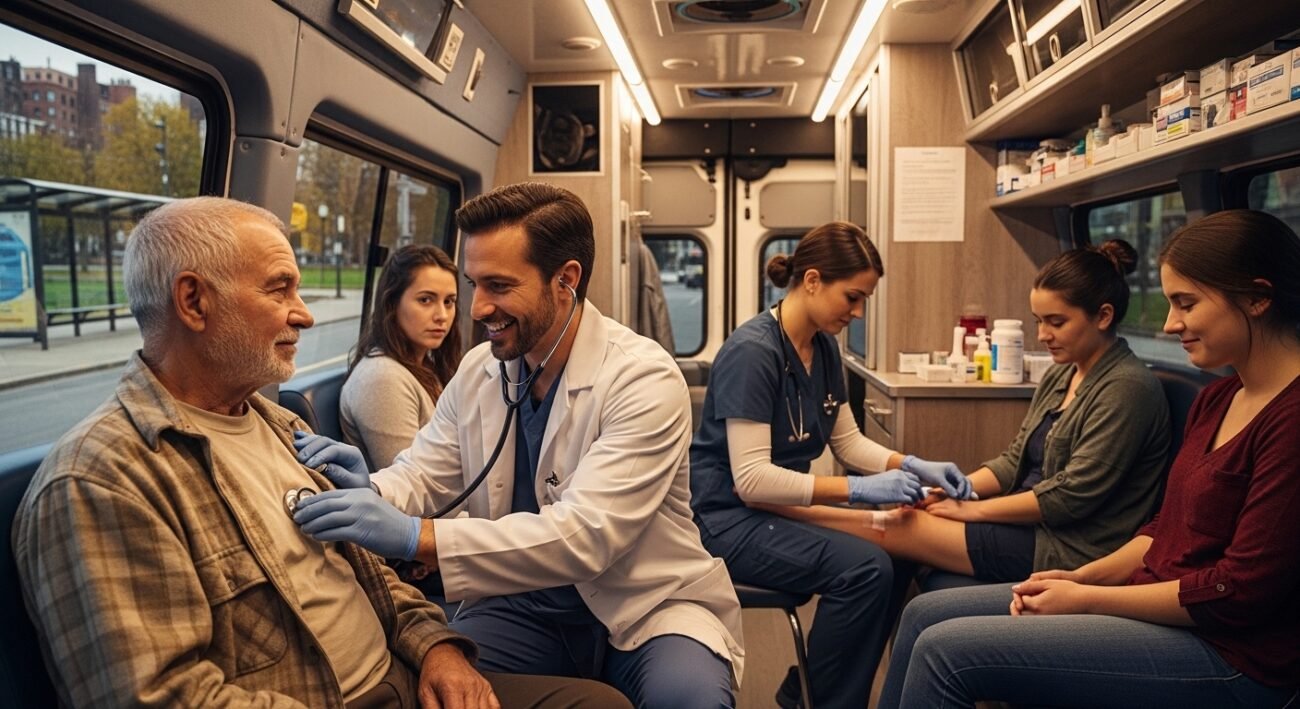
Homelessness creates profound barriers to healthcare access while simultaneously generating enormous healthcare need — the combination of exposure to environmental hazards, inability to safely store and administer medications, disrupted care continuity, mental illness and substance use disorders, and delayed care-seeking creates a population with medical complexity and acuity far exceeding general population health needs. Healthcare for the Homeless (HCH) clinics — federally funded through HRSA — and innovative clinical outreach programs bring healthcare directly to people experiencing homelessness. This guide explains how clinics serve this often-overlooked population.
Health Conditions Concentrated in Homeless Populations
People experiencing homelessness have dramatically elevated rates of: mental illness (30–40%), substance use disorders (30–40%), tuberculosis (infection rates 50–200 times higher than housed populations), HIV (3–11 times higher prevalence), hepatitis C, skin conditions (cellulitis, infestations, frostbite), foot problems, dental disease, and unmanaged chronic conditions (diabetes, hypertension, heart disease) from inability to maintain treatment. Trauma histories are nearly universal — most adults who experience homelessness have significant trauma exposure preceding and accompanying their housing instability.
Healthcare for the Homeless (HCH) Programs
HCH programs receive federal funding to provide comprehensive primary care and supportive services to people experiencing homelessness, using mobile units, shelter-based clinics, and drop-in clinic models that meet patients where they are rather than requiring them to navigate traditional clinic systems. HCH programs integrate case management, mental health, dental, and substance use services to address the complex interacting needs of their population. They accept all patients regardless of insurance status or ability to pay.
Trauma-Informed Care
Trauma-informed care — recognizing that nearly all patients experiencing homelessness have significant trauma histories and adapting clinical practice to avoid re-traumatization — is not optional in this population. It involves creating physically and emotionally safe clinical environments, avoiding authoritative interactions that replicate experiences of powerlessness, explaining all procedures before performing them, and offering choices wherever possible.
Conclusion
Everyone deserves healthcare — including people experiencing homelessness, who bear disproportionate disease burden in no small part because the healthcare system has been difficult for them to access. HCH clinics, street medicine programs, and hospital-based homeless health programs are closing this gap through innovative, relationship-centered care that meets the most marginalized patients where they are.
FAQs – Homeless Healthcare
Q1. Can a homeless person get healthcare without an address?
A: Yes. FQHCs, HCH programs, and free clinics serve patients without permanent addresses. Homeless-specific programs use shelter addresses or P.O. boxes to fulfill insurance address requirements. MEDICAID in many states covers homeless individuals.
Q2. What is street medicine?
A: Street medicine programs bring medical care directly to homeless individuals in encampments, under bridges, and in other outdoor settings — eliminating the transportation, documentation, and navigation barriers that prevent homeless individuals from accessing traditional clinic care. Teams include physicians, nurses, social workers, and sometimes peer navigators who have lived experience with homelessness.
Q3. How can healthcare providers better serve homeless patients?
A: Practical adaptations include: not requiring appointment scheduling (same-day open access), dispensing medications in blister packs or mailing them to shelters, partnering with shelters for onsite care, not requiring insurance for basic care, connecting patients with housing navigation resources, and training all staff in trauma-informed, non-judgmental interaction.
Q4. Is mental illness the cause of homelessness?
A: Mental illness is strongly associated with homelessness but is as much a consequence as a cause — the stress, trauma, and health insults of homelessness worsen mental health. Structural factors (lack of affordable housing, inadequate mental health system resources, poverty) are primary causes of homelessness that intersect with individual vulnerabilities including mental illness.
Q5. What is medical respite care?
A: Medical respite care provides short-term residential care for homeless people who are too ill to recover on the streets but not sick enough for hospital admission — filling a critical gap in the care continuum. Medical respite programs have been shown to reduce hospital readmissions and emergency department use for homeless patients.
